



The Complete Guide to ID Card Printers and Card Issuance in the UAE
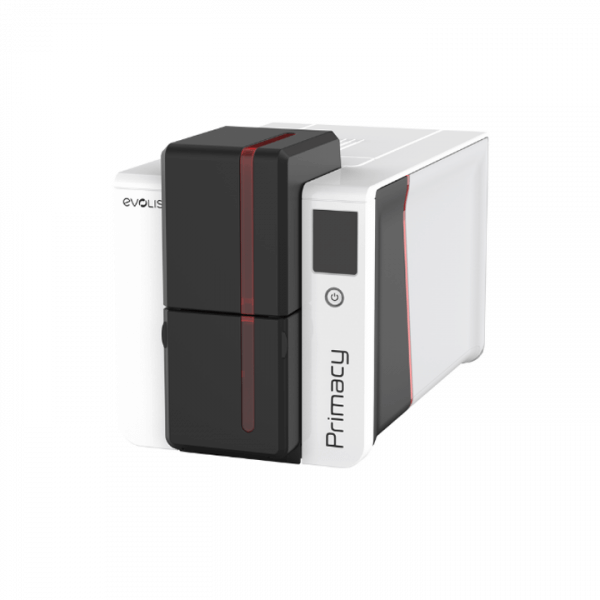
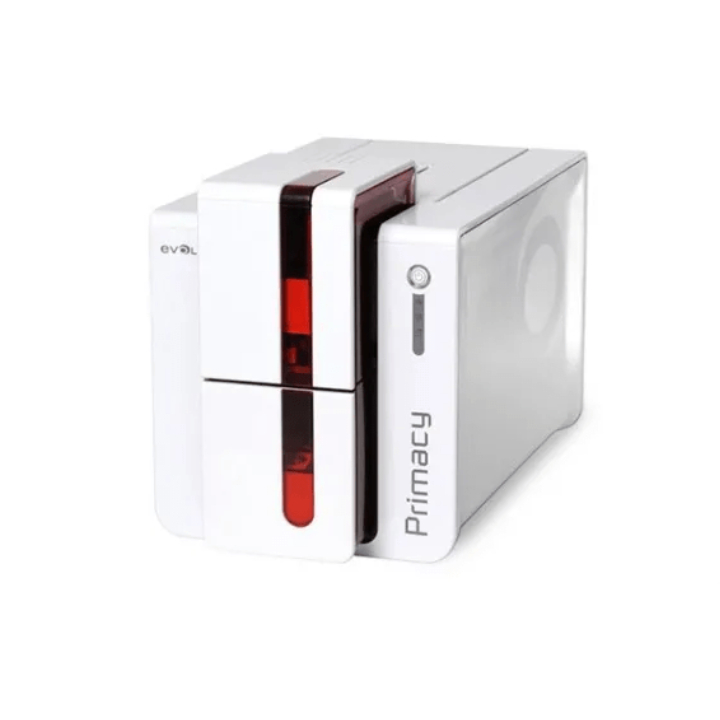
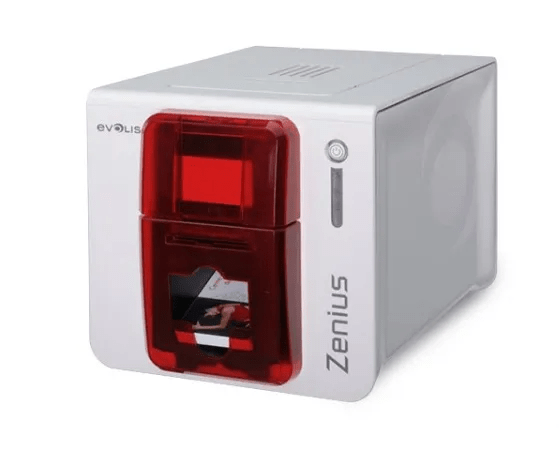
VertiLinks Technologies is the UAE's most trusted supplier of professional ID card printers, serving organisations across Dubai, Abu Dhabi, Sharjah, Ajman, Ras Al Khaimah, and the wider GCC since 2024. We are authorised resellers for HID Fargo, Evolis, and Nisca — three globally recognised leaders in card personalisation technology. Whether your requirement is a simple desktop printer for printing 200 staff badges per year or a high-throughput retransfer system producing 50,000 personalised smart cards annually, VertiLinks has the hardware, software, consumables, and post-sales support to deliver a complete end-to-end solution.
ID card printing is far more than placing a name and photo on a plastic card. Modern card issuance programmes encompass logical and physical access control, biometric enrolment, visitor management, loyalty programme integration, and regulatory compliance documentation. The printer is the culmination of a data pipeline that begins with an HR record, moves through a badge design template, triggers personalisation parameters, and ends with a laminated, encoded credential that grants or restricts access to physical spaces, computer networks, and digital services.
In the UAE, where workforce populations are large, multicultural, and frequently updated due to high staff turnover rates in sectors like construction, hospitality, and retail, the ability to produce credentials on-demand is operationally critical. Outsourcing card production to third-party bureaus introduces turnaround delays of 3–5 business days, creates data privacy risks when employee photographs and biometric data leave the organisation, and drives per-unit costs that are 4–6x higher than in-house printing. Organisations with more than 300 employees typically reach positive ROI within 12–18 months of deploying an in-house card printer — even when accounting for hardware, ribbons, blank cards, and software licensing.
VertiLinks handles the entire deployment lifecycle: requirements assessment, printer selection, badge template design, software integration with your HR or access control platform, on-site installation, operator training, and post-installation support. Our annual maintenance contracts guarantee uptime through preventive servicing, firmware updates, and priority parts replacement — ensuring your badge production programme never experiences unplanned downtime.
Direct-to-Card (DTC) vs Retransfer ID Card Printing: A Technical Comparison
The most fundamental decision in selecting an ID card printer is the choice between direct-to-card (DTC) and retransfer (reverse transfer) printing technology. Both use dye-sublimation — a process where heat from a thermal print head sublimates dye from a ribbon into the surface of the receiving material — but differ fundamentally in how that receiving material relates to the finished card.
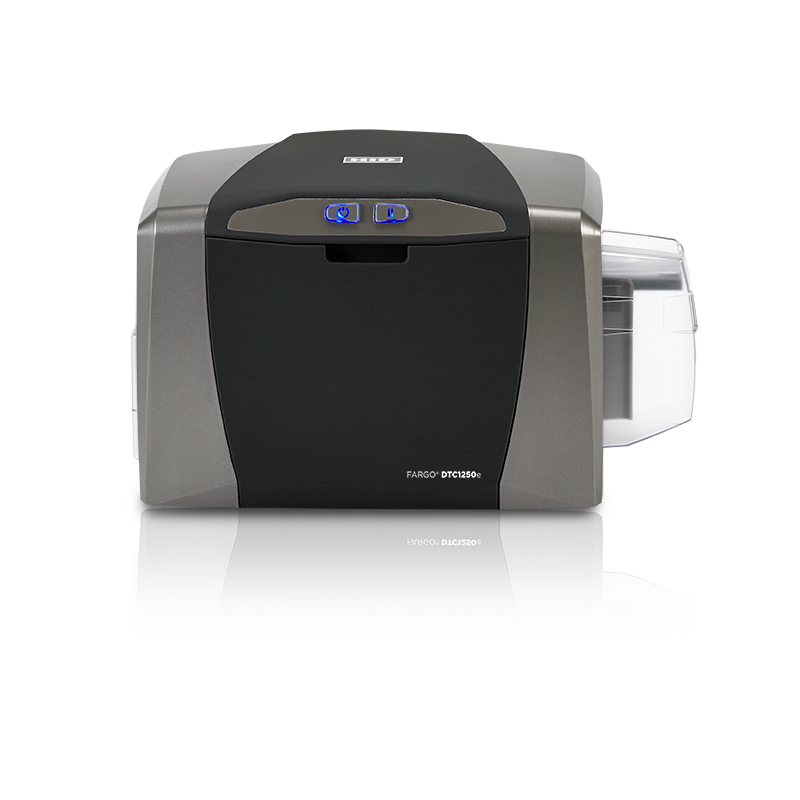
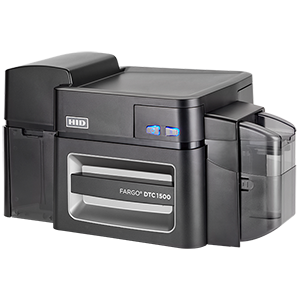
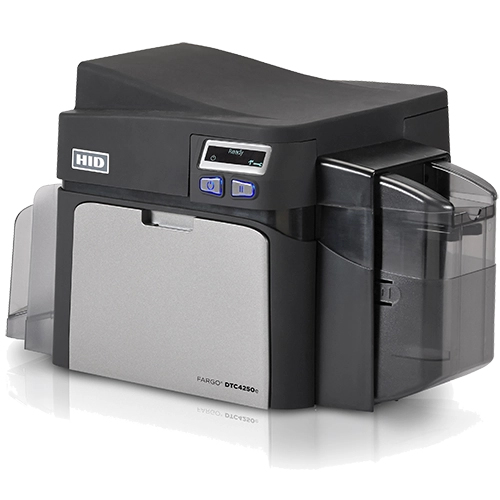
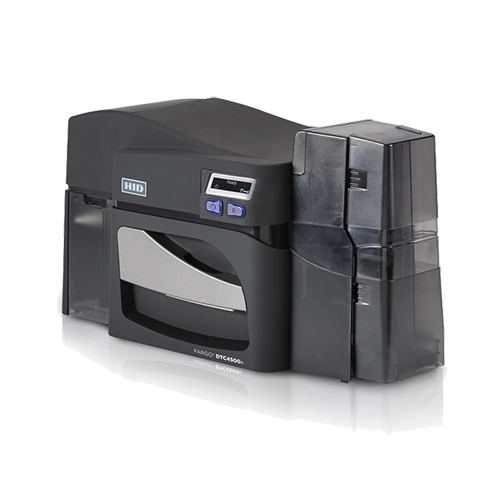
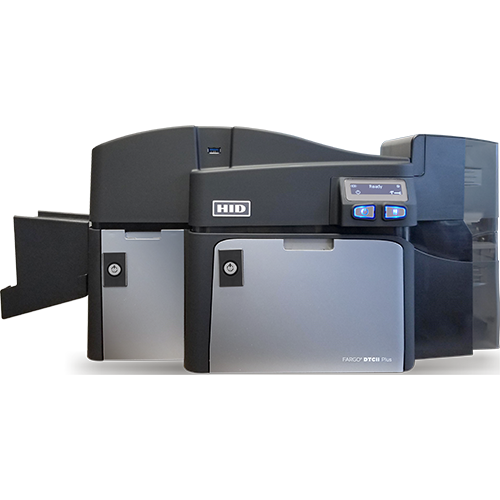
DTC printers apply dye panels directly onto the surface of the PVC card. The ribbon typically consists of YMCKO panels: Yellow, Magenta, Cyan (for full-colour printing), K (black resin for crisp text and barcodes), and O (clear overcoat for durability). DTC printers are fast, with single-sided print speeds of 15–20 cards per minute, and relatively affordable — entry-level models like the HID Fargo DTC1250e start at a fraction of the cost of retransfer alternatives. The limitation is that DTC printing cannot reach the physical edges of the card, leaving a 1–2mm unprintable border. For standard corporate badges printed on plain white PVC cards, this is inconsequential. However, DTC printers may struggle with the raised contours of embedded smart card chips or proximity antenna coils, producing print voids or uneven laminate adhesion on technology cards.
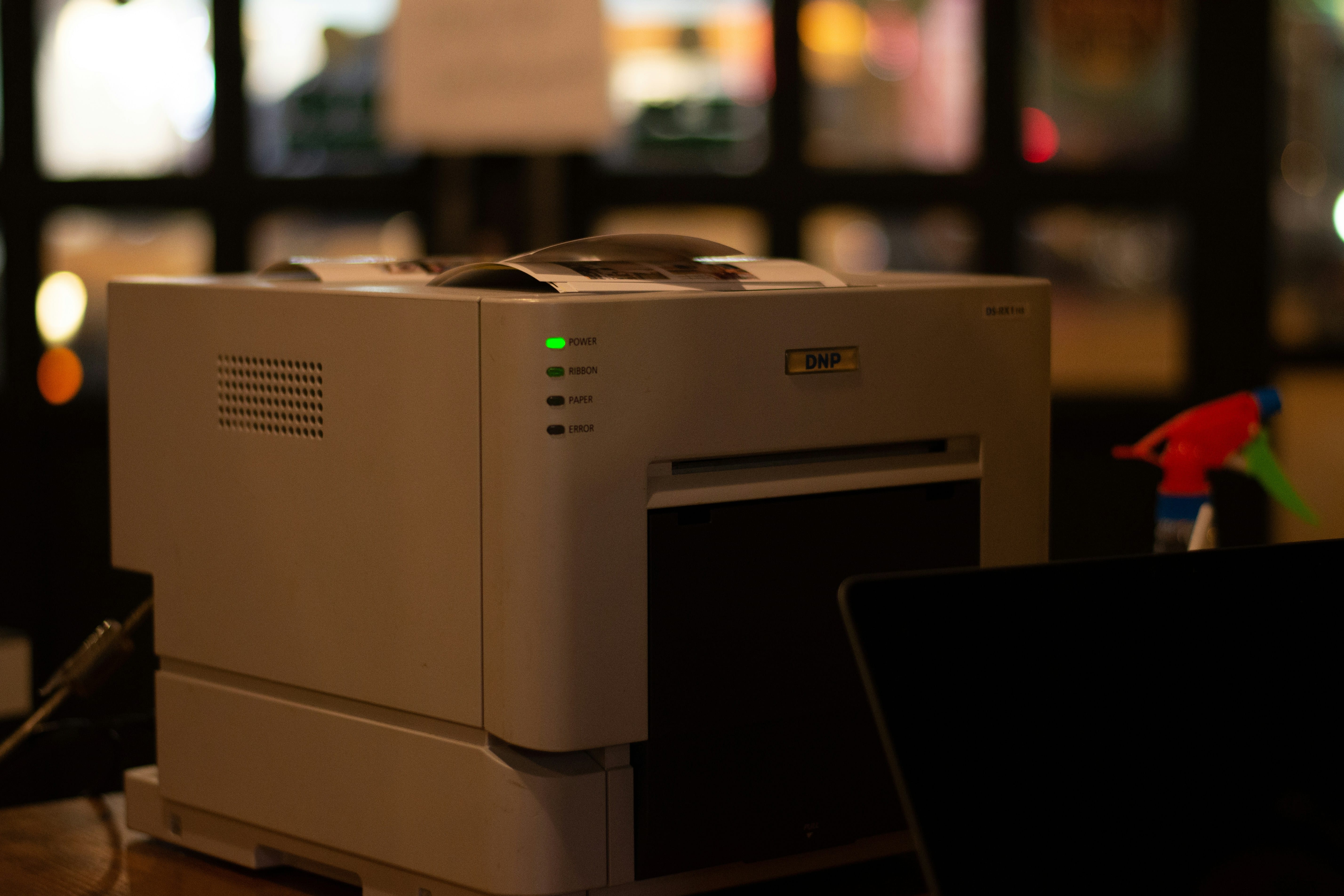
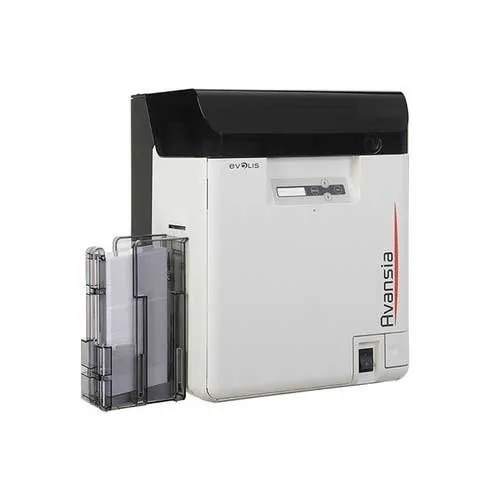
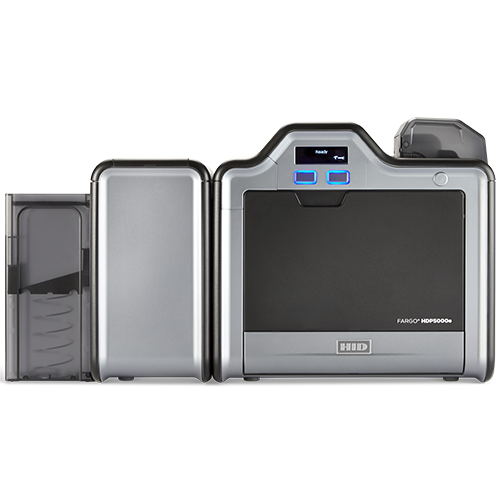
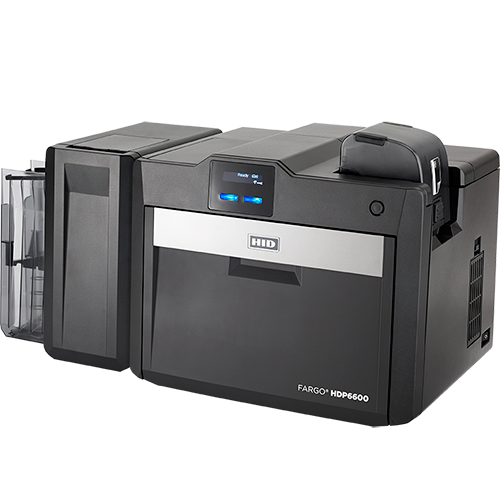
Retransfer printers (also called HDP — High Definition Printing — in HID Fargo's nomenclature) print onto a transparent intermediate film using a thermal print head. Once the image is fully formed on the film, a second heated roller simultaneously fuses the film to the card surface and laminates it. This two-stage process delivers several critical advantages: true over-the-edge printing to the card's full perimeter, consistent print quality on uneven card surfaces (smart cards, contactless cards, key fobs), significantly higher image resolution (up to 600 DPI versus 300 DPI for most DTC models), and an additional physical security layer from the retransfer film itself. The HID Fargo HDP6600 and HDP5000 are the UAE market's most widely deployed retransfer systems for government ID, financial cards, and high-security corporate credentials.
Encoding Modules: Magnetic Stripe, Smart Card, and Contactless
An ID card printer without encoding capability produces a visual-only credential — suitable for basic identification but unable to interface with access control readers, payment terminals, or time attendance systems. Encoding modules are factory-fitted or field-retrofitted hardware components that write data to embedded technologies within the card substrate during the print cycle.
Magnetic stripe encoding (ISO 7811) writes up to three tracks of data — typically employee ID, facility code, and cardholder number — to the brown or black magnetic stripe on the card's rear. Magnetic stripe technology is mature, low-cost, and supported by virtually every access control and time attendance reader manufactured in the past 30 years. However, magnetic stripe data is easily duplicated using a $20 card skimmer, making it inadequate for high-security environments. Contact smart card encoding (ISO 7816) communicates with a gold contact pad on the card surface to read and write data to an embedded microprocessor. Contact cards are used in banking (EMV chip-and-PIN), government ID programmes (UAE national ID), and PKI-based logical access applications. Contactless smart card encoding (ISO 14443, ISO 15693) uses near-field inductive coupling to communicate with RFID chips embedded in the card body — no physical contact is required. MIFARE Classic, MIFARE DESFire EV3, HID iCLASS SE, and HID SEOS are the most common contactless technologies deployed in UAE access control systems. VertiLinks configures and tests all encoding modules against your specific reader hardware and access control software before delivery.
Consumables: Ribbons, Blank Cards, and Overlaminates
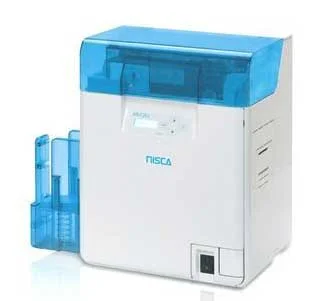
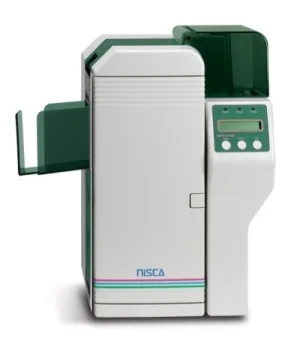
The total cost of card ownership extends well beyond the printer hardware. Consumables — ribbons, blank PVC cards, cleaning kits, and overlaminate films — represent the ongoing operational cost that, over a 3–5 year hardware lifecycle, typically exceeds the original purchase price by 200–400%. VertiLinks is a stocking resellers of genuine consumables for HID Fargo, Evolis, and Nisca printers, with inventory held in our Dubai warehouse for next-day delivery anywhere in the UAE.
Genuine ribbons are not merely a matter of brand loyalty — they contain authentication chips that communicate with the printer firmware to verify authenticity, enable precise colour calibration, and trigger automatic cleaning cycles at the appropriate intervals. Using third-party ribbons voids manufacturer warranties, introduces colour inconsistency, and can damage the thermal print head through incorrect formulation or contaminated panels. Blank PVC cards are sourced in CR80 (standard credit card) format, with 30 mil thickness for standard applications and 10–20 mil for card-in-card or insert applications. We also supply composite PVC/polyester cards for improved durability and pre-printed card stocks with custom backgrounds for batch personalisation.
Badge Design Software and HR System Integration
A printer without design software produces nothing. VertiLinks supplies and configures badge design and issuance software to complete your card production workflow. HID Fargo printers are compatible with HID FlexSmart, Asure ID, and Badgy Professional. Evolis printers include Evolis Premium Suite and support third-party solutions including CardPresso and ID Works. We also integrate with enterprise HRMS platforms including SAP SuccessFactors, Oracle HCM, and Microsoft Dynamics 365 HR through custom API connectors that automate card issuance triggers — a new employee record in your HR system automatically initiates card production without manual intervention from the security or IT team.